VR, Ageing (2019)
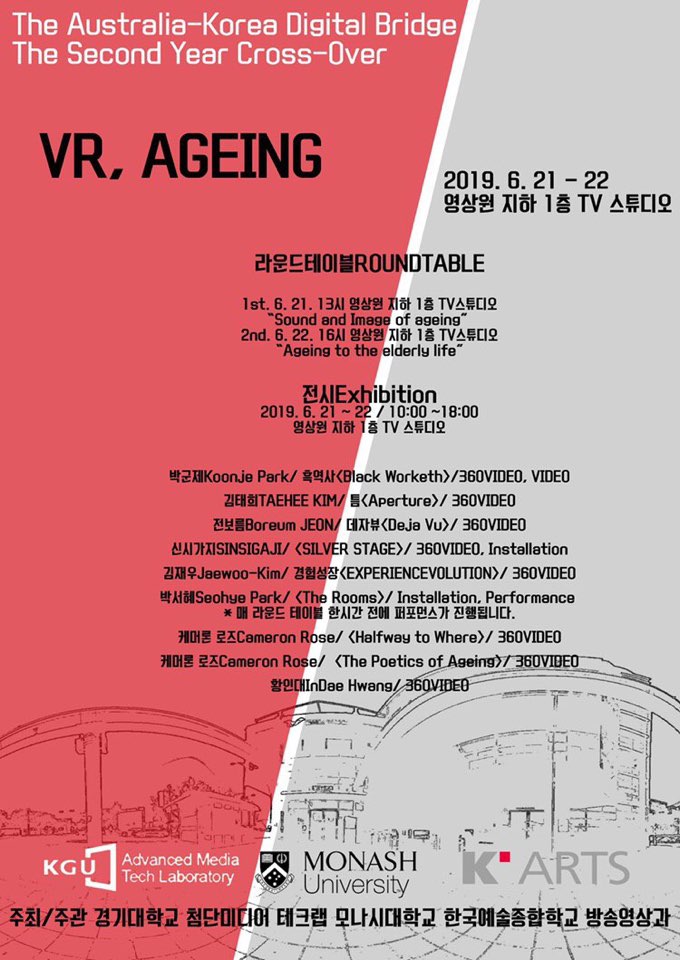
VR, Aeging (2019), 한국예술종합학교, 서울, 한국
Silver Stage(2019)_VR, dimension variable
노인 700만 시대. 65세 이상 고령자 비율이 전체 인구의 14.3 퍼센트인 한국은 초고령 사회 진입을 눈앞에 두고 있다. 그러나 급변하는 시대에서 세대 간의 갈등은 여전히 개선될 여지를 보이지 않고 있다. 신시가지는 이러한 갈등 속에서 세대 간의 어떤 연결고리를 만드는 작업을 진행해보고자 했다.
그 일환으로, <Sliver Stage>는 욕망이 거세된 존재로 규정되어 온 노인들에게도 다양한 욕구들이 존재하고 그에 대한 해소법이 필요함을 말하기 위해 콜라텍이라는 공간을 선택한다. 노인들이 즐길 수 있는 놀이 문화는 점점 음지로 숨어 들어갈 수밖에 없는 현실 속에서, <Silver Stage> 프로젝트는 노인의 놀이 문화 중 하나인 콜라텍 문화를 스테이지 위로 올려 보여준다.
In an era of seven million seniors, with adults aged 65 and over making up 14.3% of the total population, Korea is standing on the threshold of becoming a “super-aged” society. Yet despite this dramatic demographic shift, generational conflict shows little sign of improvement. Within this tension, Shinsi Gajigee seeks to explore ways of building connections across generations.
As part of this effort, Silver Stage chooses the space of a “colatek”—a daytime disco for seniors—to challenge the notion of the elderly as beings devoid of desire. The project asserts that older adults possess diverse longings and require outlets through which to fulfill them. In a reality where senior leisure culture is increasingly pushed into the shadows, Silver Stage brings the culture of the colatek—one of the few remaining play spaces for the elderly—onto a stage, illuminating it for all to see.
짐+ (2019)
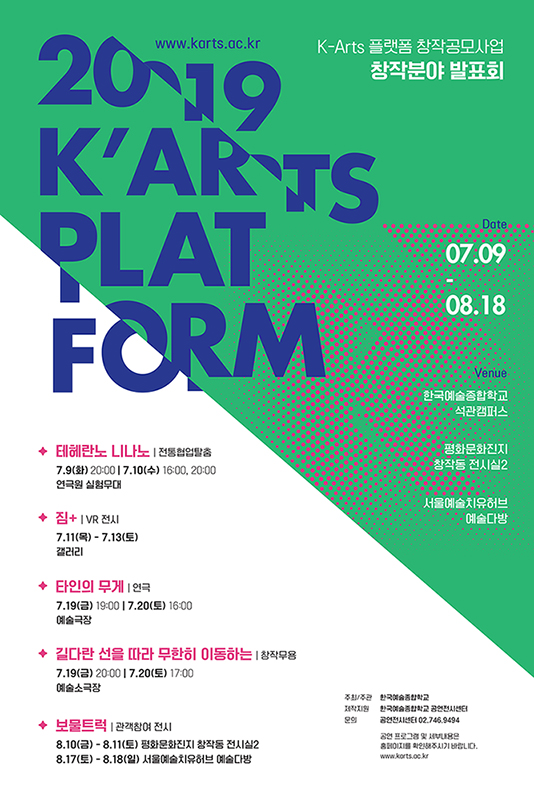
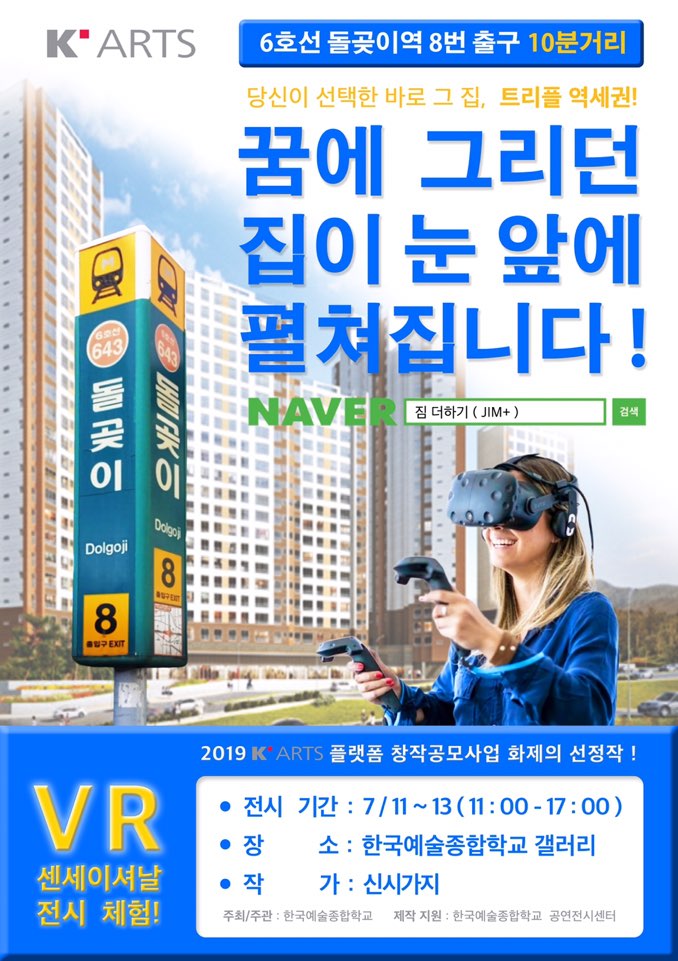
짐+ (2019), 한국예술종합학교 갤러리, 서울, 한국
Room in the Box(2019)_Video
Bravo, My Home(2019)_Video
VR Real Modeling : 배치하기 혹은 구겨넣기(2019)_VR
짐에서 선 두개(+)를 더하면 집이 된다. ‘짐더하기’는 짐만 겨우 놓을 수 있는 곳을 집이라 할 수 있는 것인지에 대한 물음에서 시작됐다. 10평은 커녕 5평도 채 되지 않는 ‘방’을 ‘집’이라 부르며 사는 청년들. 14제곱미터, 평수로 따지면 4평. 기본적인 세간만 들여놓을 수 있는 좁은 면적이 정부가 정한 인간이 쾌적하게 살아가기 위한 최소한의 주거기준이다. 우리는 방보다도 못한 공간을 집이라고 부르는 것에 의문을 던지고 진정한 ‘최저 주거기준’을 찾아보려한다.
Jim+ (2019), Korea National University of Arts Gallery, Seoul, Korea
Room in the Box (2019)_Video
Bravo, My Home (2019)_Video
VR Real Modeling: Arranging or Forcing In (2019)_VR
In Korean, adding two lines (“+”) to the word jim (meaning “burden” or “load”) transforms it into jip, meaning “house.” Jim Plus begins with the question of whether a space barely large enough to hold one’s belongings can truly be called a home.
Today, young adults live in tiny rooms—often less than 5 pyeong (approximately 17 m²), sometimes under 3 pyeong (10 m²)—yet call them homes. The government’s minimum housing standard for a “livable” space is 14 m², just enough to bring in essential furnishings. This project questions the reality that spaces smaller than a proper room are labeled as houses, and seeks to investigate what a true minimum standard of living should be.
Showcase 2019 Playing the Future
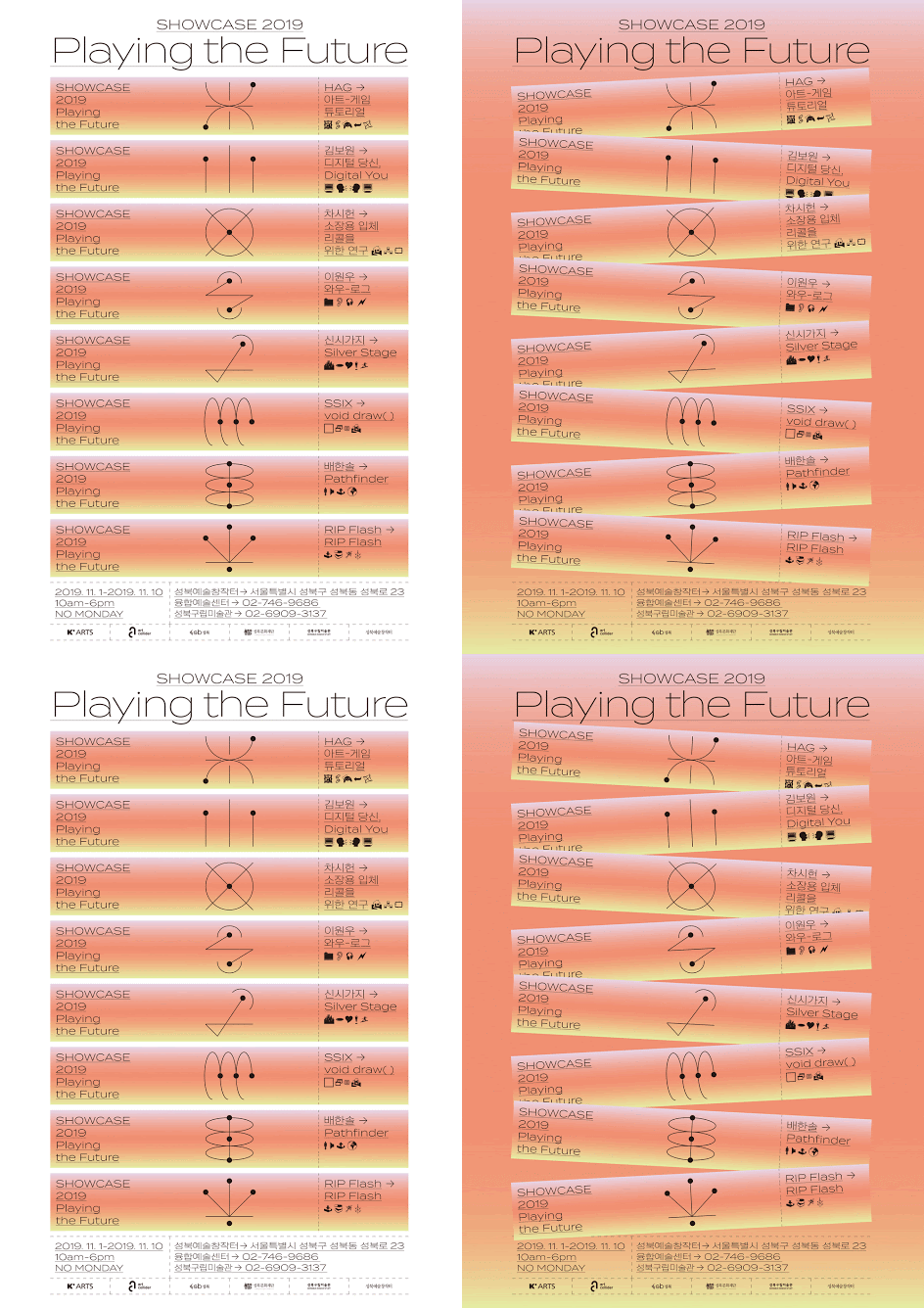
Playing the Future (2019), 성북예술창작터, 서울, 한국
Silver Stage(2019)_VR, dimension variable
Dancing Mirror(2019)_Interactive installation, dimension variable
노인 700만 시대. 65세 이상 고령자 비율이 전체 인구의 14.3 퍼센트인 한국은 초고령 사회 진입을 눈앞에 두고 있다. 그러나 급변하는 시대에서 세대 간의 갈등은 여전히 개선될 여지를 보이지 않고 있다. 신시가지는 이러한 갈등 속에서 세대 간의 어떤 연결고리를 만드는 작업을 진행해보고자 했다.
그 일환으로, <Sliver Stage>는 욕망이 거세된 존재로 규정되어 온 노인들에게도 다양한 욕구들이 존재하고 그에 대한 해소법이 필요함을 말하기 위해 콜라텍이라는 공간을 선택한다. 노인들이 즐길 수 있는 놀이 문화는 점점 음지로 숨어 들어갈 수밖에 없는 현실 속에서, <Silver Stage> 프로젝트는 노인의 놀이 문화 중 하나인 콜라텍 문화를 스테이지 위로 올려 보여준다.
Silver Stage(2019)_VR, dimension variable
Dancing Mirror(2019)_Interactive installation, dimension variable
노인 700만 시대. 65세 이상 고령자 비율이 전체 인구의 14.3 퍼센트인 한국은 초고령 사회 진입을 눈앞에 두고 있다. 그러나 급변하는 시대에서 세대 간의 갈등은 여전히 개선될 여지를 보이지 않고 있다. 신시가지는 이러한 갈등 속에서 세대 간의 어떤 연결고리를 만드는 작업을 진행해보고자 했다.
그 일환으로, <Sliver Stage>는 욕망이 거세된 존재로 규정되어 온 노인들에게도 다양한 욕구들이 존재하고 그에 대한 해소법이 필요함을 말하기 위해 콜라텍이라는 공간을 선택한다. 노인들이 즐길 수 있는 놀이 문화는 점점 음지로 숨어 들어갈 수밖에 없는 현실 속에서, <Silver Stage> 프로젝트는 노인의 놀이 문화 중 하나인 콜라텍 문화를 스테이지 위로 올려 보여준다.
Playing the Future (2019), Seongbuk Art Creation Center, Seoul, Korea
Silver Stage (2019)_VR, variable dimensions
Dancing Mirror (2019)_Interactive installation, variable dimensions
In an era of seven million seniors, with adults aged 65 and over making up 14.3% of the total population, Korea is standing on the threshold of becoming a “super-aged” society. Yet despite this dramatic demographic shift, generational conflict shows little sign of improvement. Within this tension, Shinsi Gajigee seeks to explore ways of building connections across generations.
As part of this effort, Silver Stage chooses the space of a “colatek”—a daytime disco for seniors—to challenge the notion of the elderly as beings devoid of desire. The project asserts that older adults possess diverse longings and require outlets through which to fulfill them. In a reality where senior leisure culture is increasingly pushed into the shadows, Silver Stage brings the culture of the colatek—one of the few remaining play spaces for the elderly—onto a stage, illuminating it for all to see.
2021 Forking Room <부재하는 데이터셋>
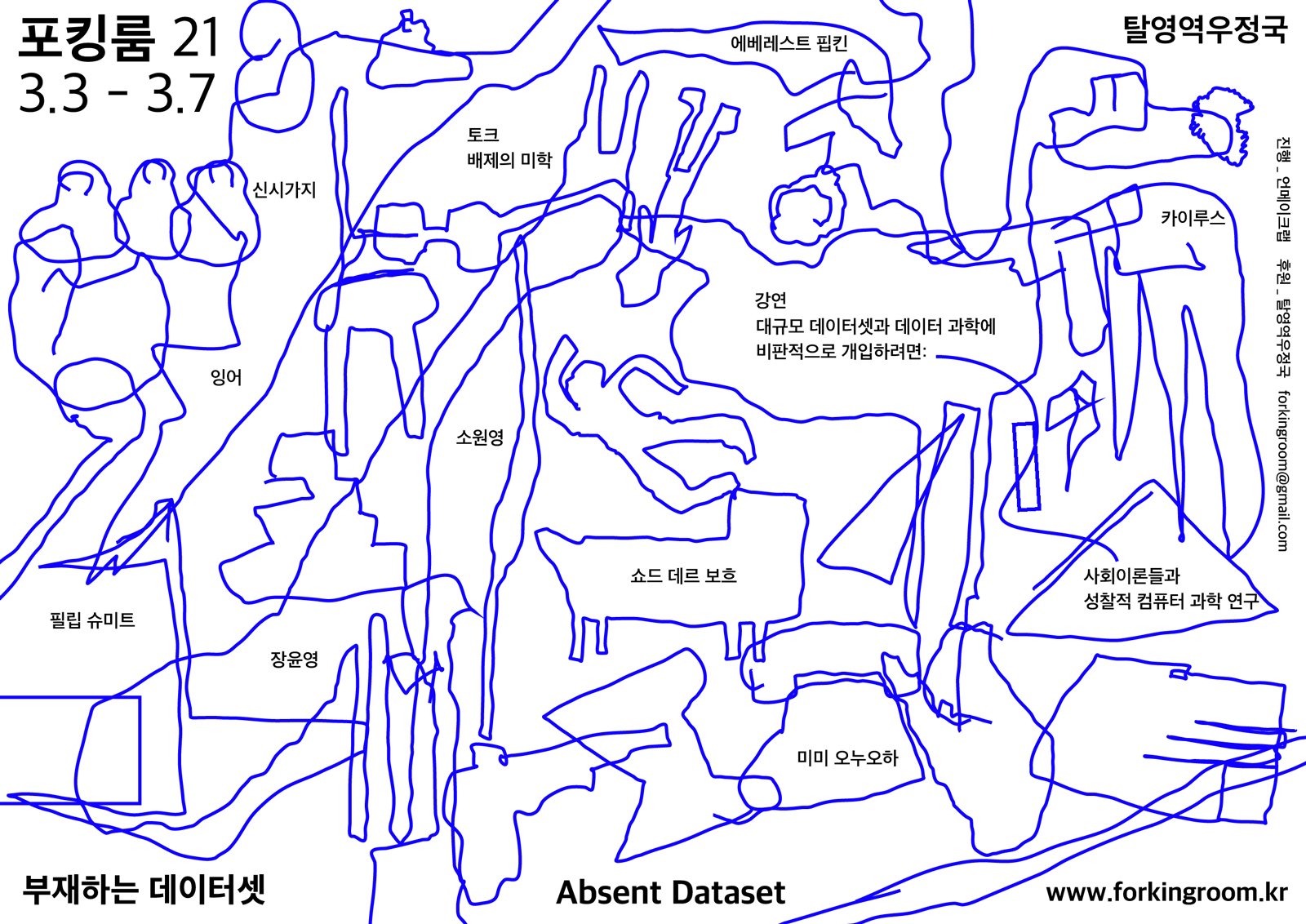
2021 Forking Room <부재하는 데이터셋> (2021), 탈영역 우정국, 서울, 한국
새로운 맹서(2019)_Interactive installation, dimension variable
<새로운 맹서>는 남성의 시각으로 쓰인 근현대사에 의문을 품고, 영화배우 최은희가 출연한 1950-1970년대 한국 영화 속 여성 캐릭터를 통해 그 속에 숨어있는 여성의 욕망을 수집, 가시화하는 작업이다.
한국 전쟁 이후, 국가는 전후 재건과 근대 국가의 건설을 목적으로 이른바 ‘신여성’들을 가부장 체제 아래 가정의 구성원으로 편입시키고자 했다. 그 결과, 1960년대 영화 속 여성은 전쟁으로 인해 무너진 가장의 권리를 복원하는 데 도움이 될만한 어머니 또는 부인으로서만 대표될 수 있었다.
그중에서도 배우 ‘최은희’는 이국적인 외모에도 불구하고 대표적인 한국의 어머니상으로 호명되어 왔는데, 이는 당시 서구화된 개인주의와 자유주의를 추구하던 신여성들을 가정으로 편입시키기 위한 시도라고 해석되곤 한다. 그러나 가부장적 질서 안에서 은밀하게 자신의 욕망을 드러내는 영화 속 여성 캐릭터들은 무의식적으로 지배 체제에 흠집을 내어 ‘빈틈’을 유발한다. 따라서 우리는 이 흔적을 포착하는 행위를 통해 한국의 근현대사를 여성의 시선에서 되짚어 보고자 한다.
Forking Room (2021), Post Territory Ujeongguk, Seoul, Korea
New Oath (2019)_Interactive installation, variable dimensions
New Oath questions modern Korean history written from a male perspective, collecting and visualizing hidden traces of women’s desire through female characters portrayed by actress Choi Eun-hee in Korean films from the 1950s to 1970s.
After the Korean War, in pursuit of postwar reconstruction and the establishment of a modern nation-state, the government sought to incorporate so-called “new women” into the patriarchal family system. As a result, women in 1960s cinema could only be represented as mothers or wives who might help restore the authority of men whose roles had collapsed due to the war.
Among them, actress Choi Eun-hee—despite her exotic appearance—came to embody the archetypal “Korean mother.” This was often interpreted as an attempt to domesticate westernized new women, who aspired to individualism and liberalism, by drawing them back into the household. Yet the female characters in these patriarchal films secretly reveal their desires, creating unconscious cracks in the dominant system—gaps through which subversion emerges. By capturing these traces, New Oath seeks to reexamine Korea’s modern history through the eyes of women.

Beyond Biophilia (2022), 국립아시아문화전당, 광주, 한국
그림자 정원 Phony Garden
무아(2022)_VR, dimension variable
초록을 찾아서, Find Green(2022)_Video
가짜식물도감, Fake Plant Book(2022)_Interactive art, dimension variable
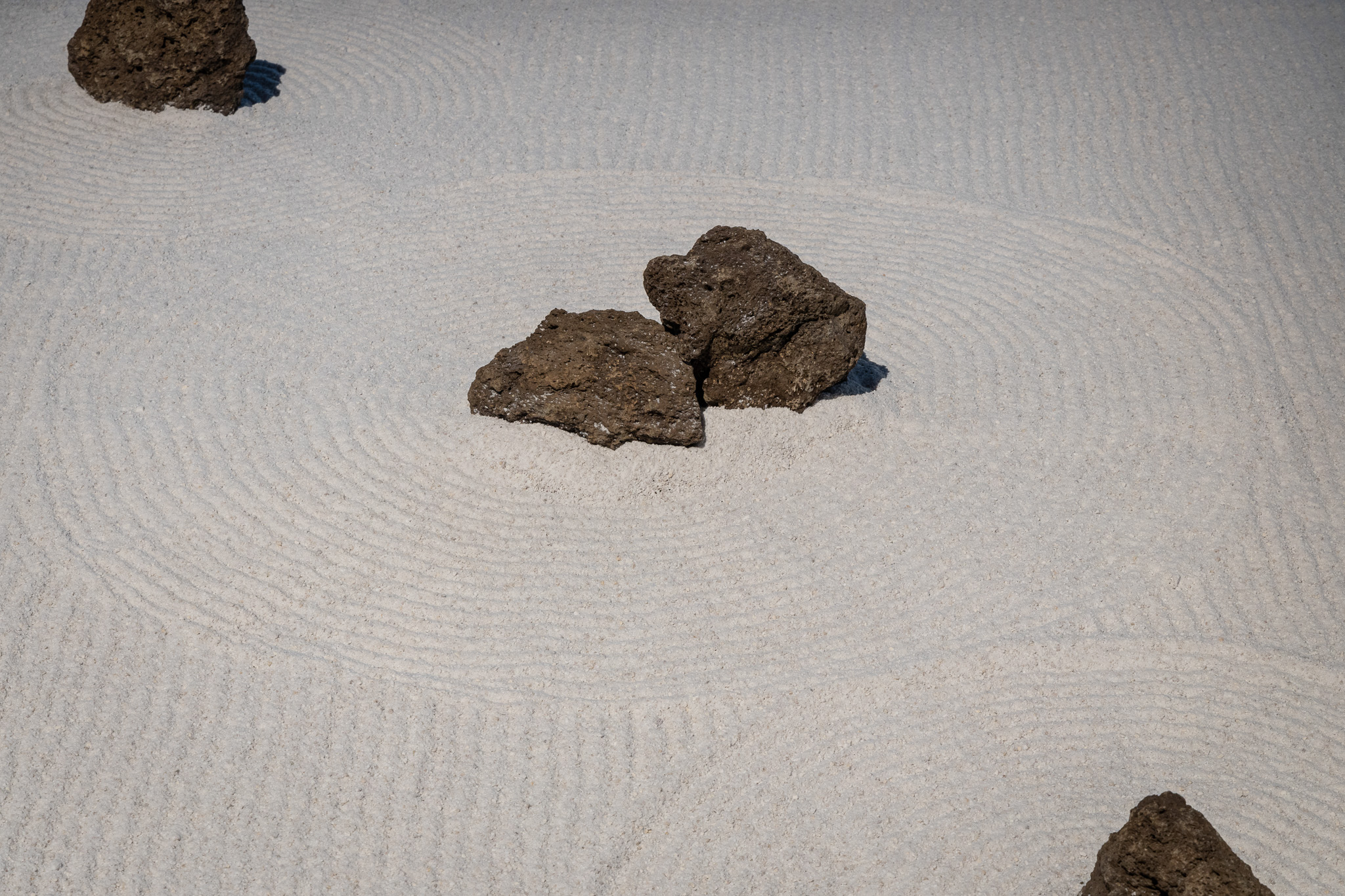
“만약 환경적 재앙이 닥쳐 지구의 모든 것이 사라져 버린다면 우리는 어떻게 다시 시작할 수 있을까?”
본 프로젝트는 ‘인류세’를 해결하지 못하고 골든 타임을 놓쳐버린 인류가 맞이할 비극적인 세상으로부터 이야기를 시작한다. 어쩌면 현실이 될지 모르는b이 시대에는 동식물을 포함한 자연적 요소들이 사라지고 오로지 인간이 남긴 데이터만이 그들의 존재를 증명해 줄 뿐이다.
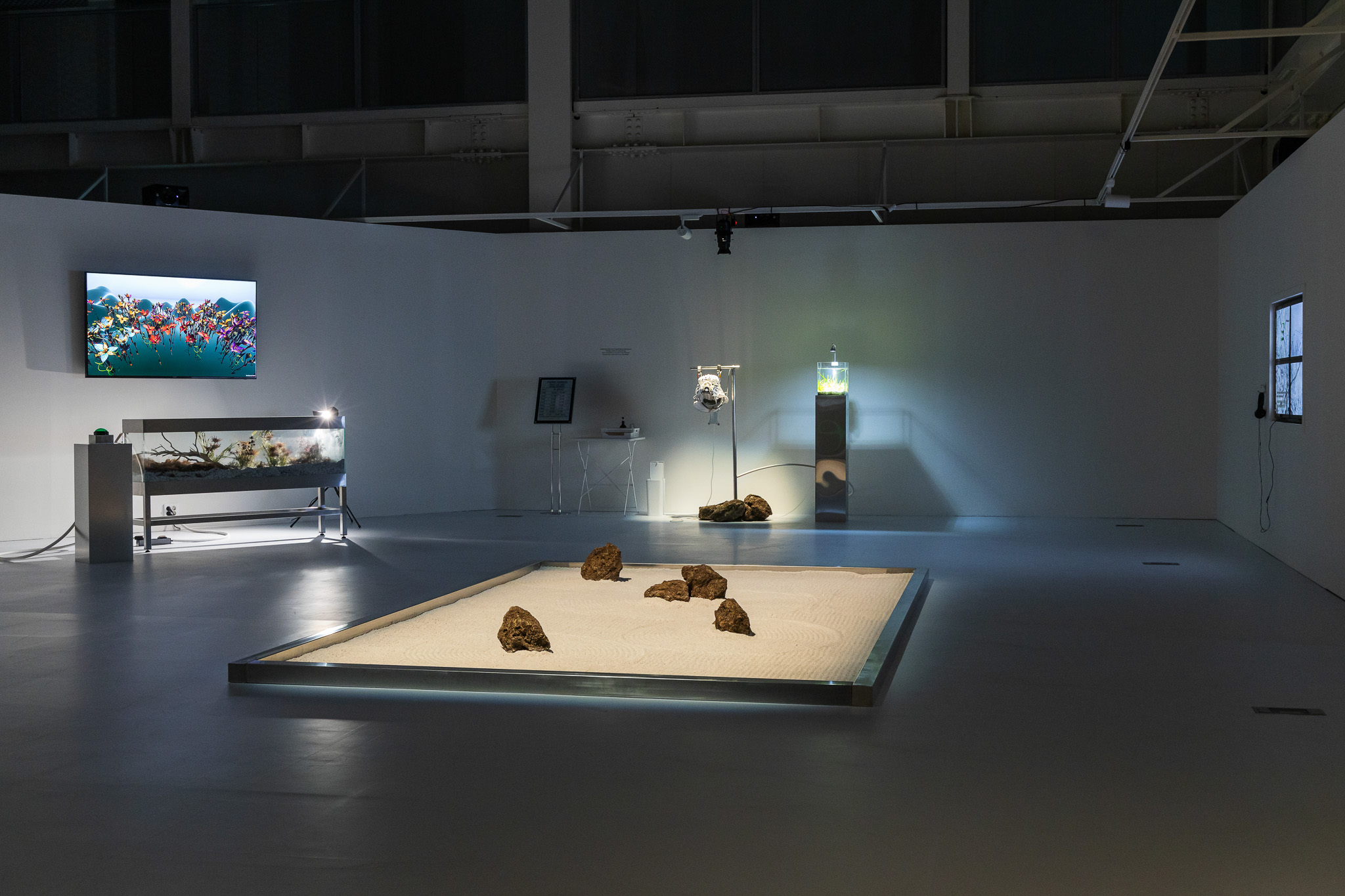
이곳에 만들어질 ‘Phony Garden’은 인간에게 남겨진 데이터를 기반으로 복원작업을 통해 만들어진 가짜 식물원이다. 이는 가장 절망적인 공간에서 희망을 찾으려는 인류의 시도이면서도, 여전히 인간 중심적인 사고를 벗어나지 못해 순환과 공존의 능력을 갖지 못한 허울 뿐인 모습이라는 점에서 역설적이다.
관객들은 지구에 남겨진 일부 데이터로 구성된 식물원 'Phony Garden'으로 입장하여, 관찰자가 아닌 당사자로서 이 공간을 부유하는 경험을 하게 된다. 공간 안의 Interactive art와 Video 작업이 ‘인류세’를 초래한 당사자로서 공간 안의 과거를 찾기 위해 기억을 더듬는 체험이라면, VR 전시는 인간을 타자화하고 정체성을 탈피하여 인간 너머의 차원에서의 지구의 희망을 상상할 수 있는 기회를 제공한다.
“If an environmental disaster occurs and everything on earth disappears, how can we start over?”
This project begins with the story of a tragic world that humanity will face after it misses the golden time to resolve the crisis of the “Anthropocene.” In this age that may become the reality, all elements of nature—including animals and plants—will disappear and their existence will be only proven by data left by humans.
The ‘Phony Garden’ to be constructed here is a fake botanical garden created by restoring data left by humans. Although this is an attempt of humans to find hope in spaces of deepest despair, the paradox is that it is nothing more than a superficial appearance that fails to escape an anthropocentric mindset; after all, it lacks the capacity to create a cyclical ecology and render coexistence.
Upon entering the ‘Phony Garden’, a botanical garden reconstructed through remaining data on earth, the audience will be able to immerse oneself in the space as an inflicted party rather than an external observer. While the interactive art and the video work in the space offer experiences of tracing back memories to discover the past from the perspective of the very entity that caused the “Anthropocene”, the VR exhibition offers an opportunity to imagine a hope for earth beyond a human level by otherizing the human and transcending human identity.
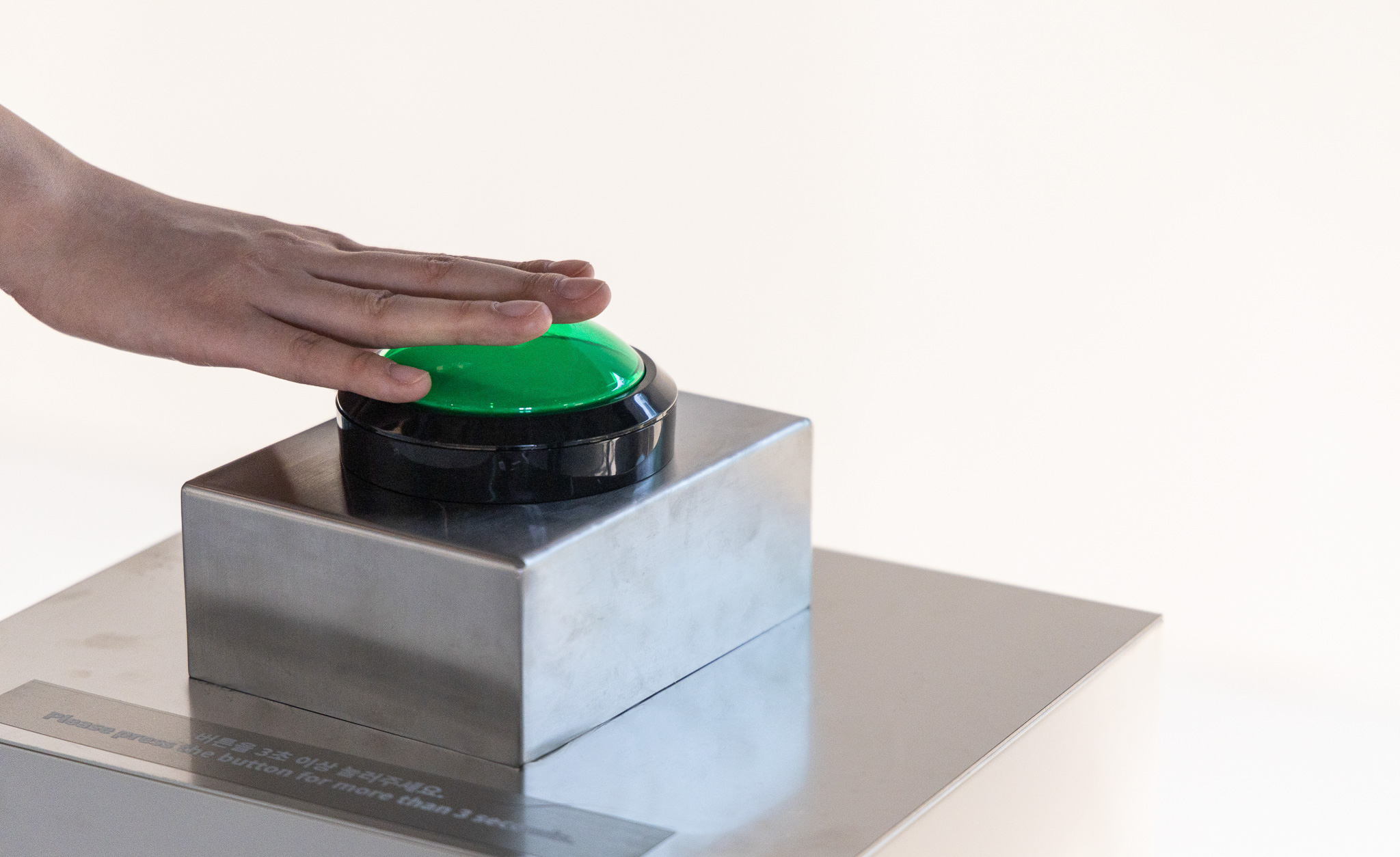
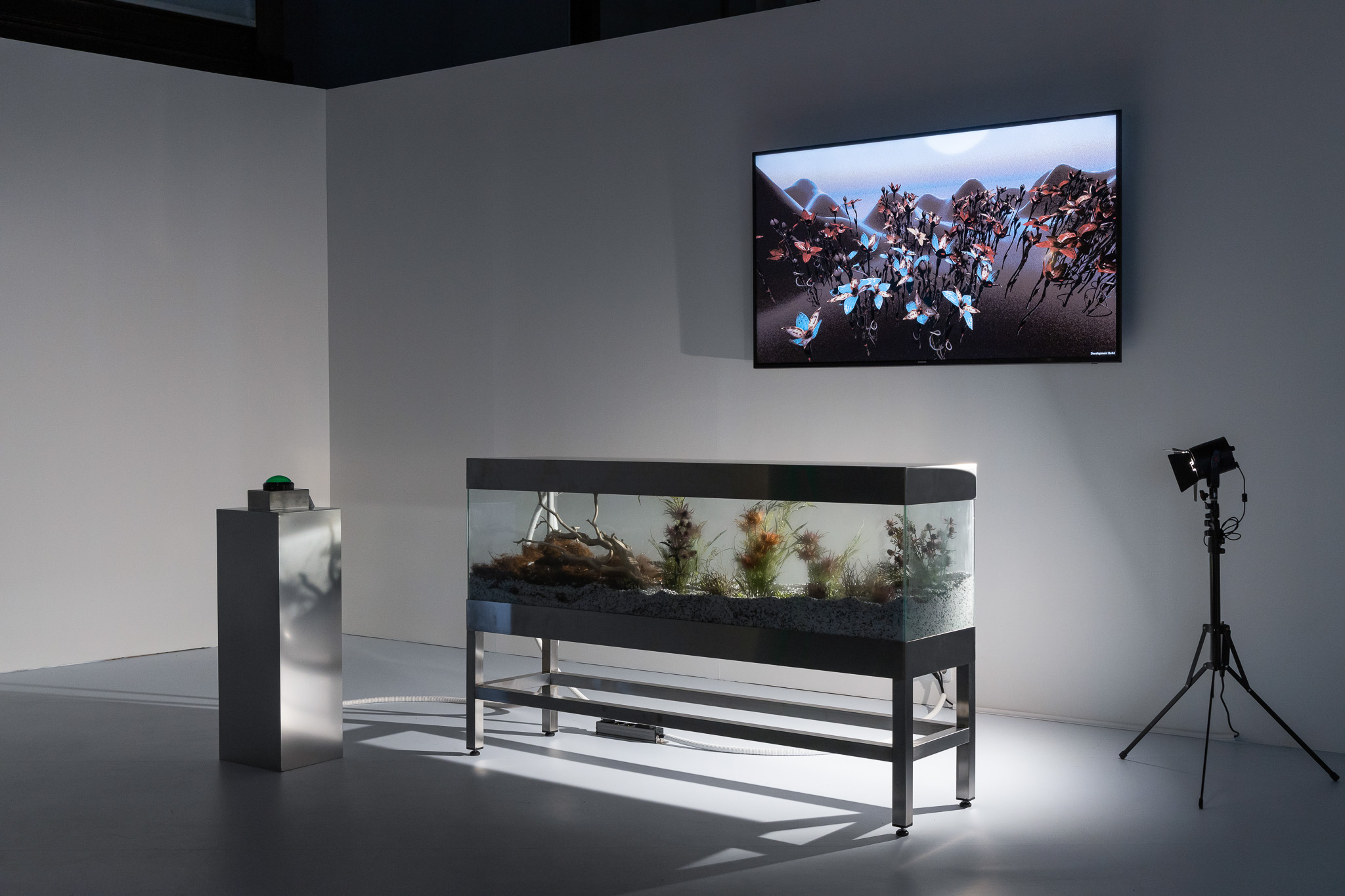
가짜식물도감, Fake Plant Book(2022)_Interactive art, dimension variable
유리온실 안에는 멸망해 버린 지구에 남겨진 단편적인 데이터를 토대로 만들어낸 가상의 식물이 있다. 관객들은 이 허구의 식물에 물을 주는 행위를 통해 식물의 현 상태와 자라나는 모습을 관찰할 수 있다. 이러한 ‘인터랙티브’는 식물의 생장처럼 보이지만 모순적이게도 같은 물로 비우고 붓기를 반복하는 의미 없는 행위로 단순히 인간이 모방한 가짜 순환일 뿐이다.
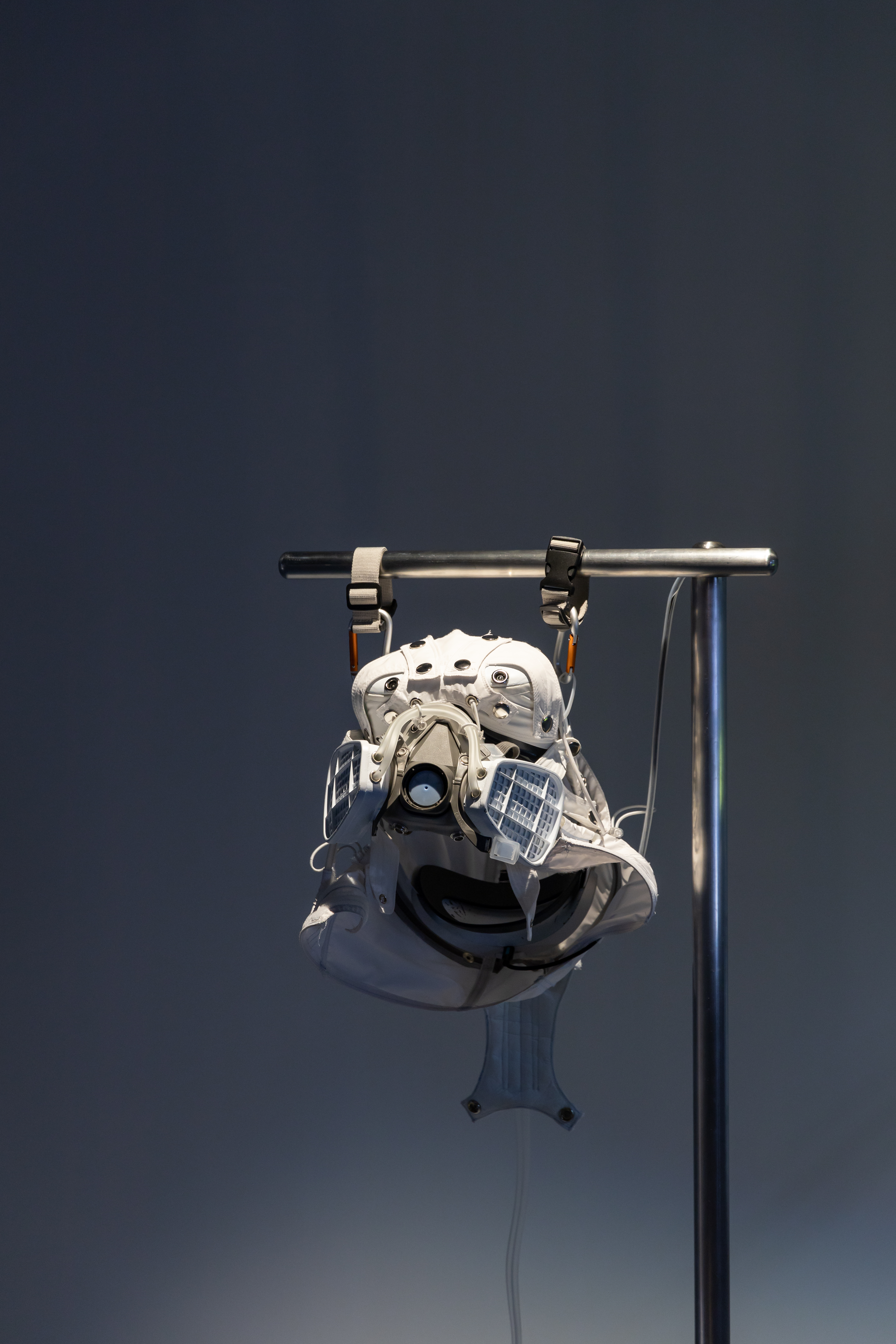
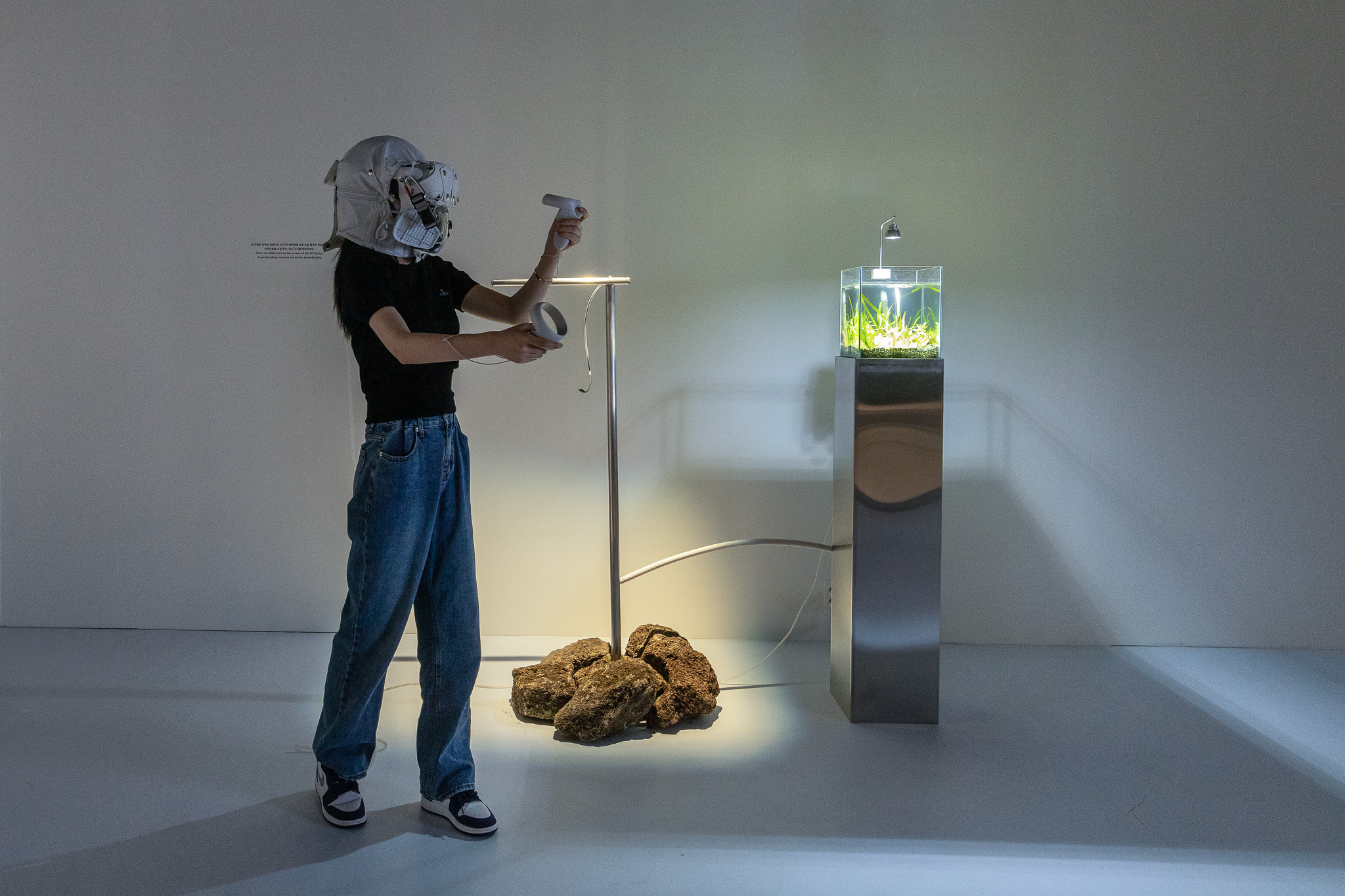
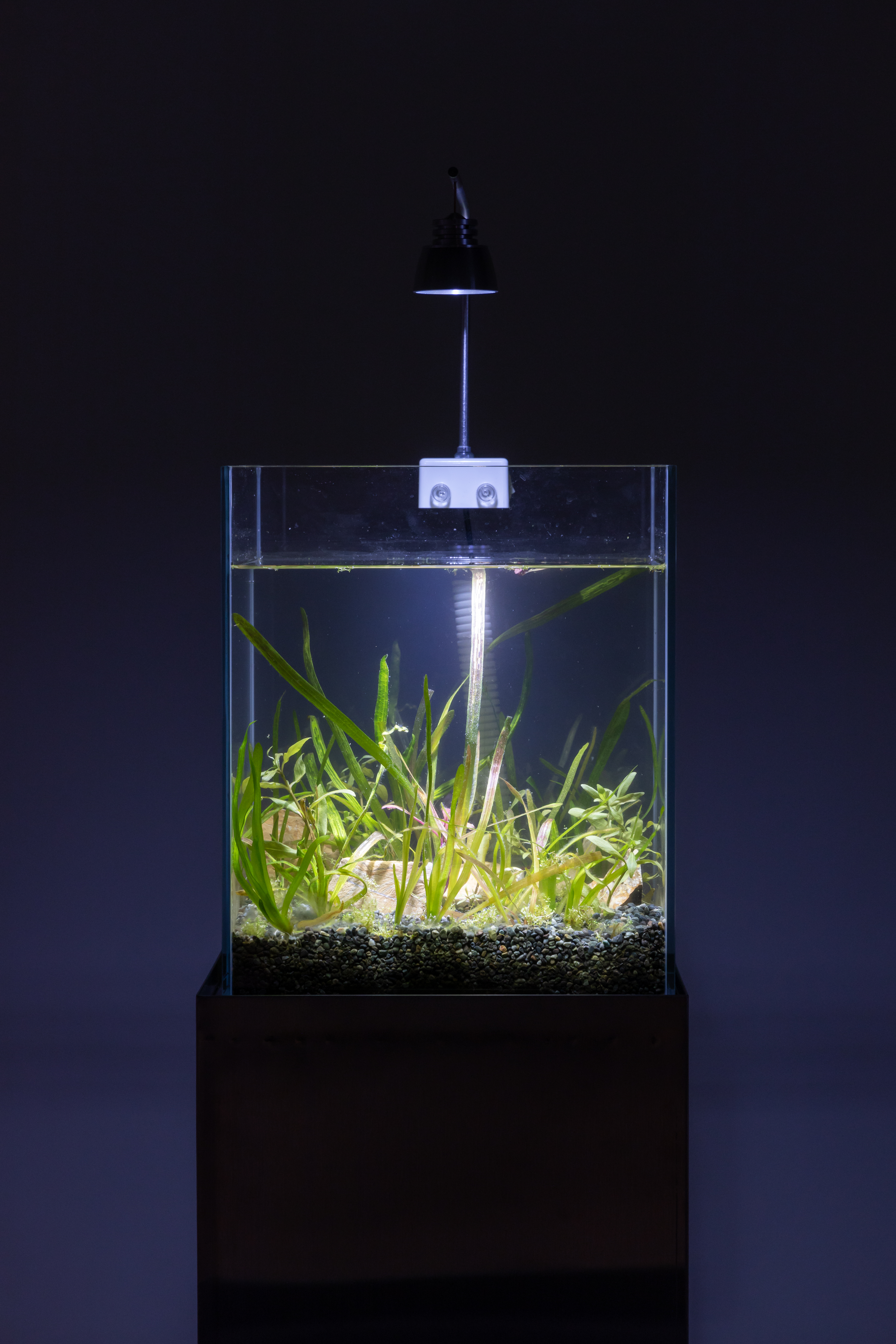
무아(2022)_VR, dimension variable
전시장 가운데에 한 개의 방독면(VR)이 마지막으로 살아있는 식물과 연결되어 있다. 전시장에서 살아있는 것은 오직 관객과 유리 속 식물 뿐이다. VR 기기를 끼고 들어간 가상의 공간 안에서 관객은 닭이 되어 마지막 살아남은 생명체로서 세계를 헤매게 된다. 전시장 내부의 다른 작품들이 현실에서 인간 중심적 사고에 머문 환경 복원에 대한 한계를 보여주고 있다면 이 작업은 역설적으로 가상 세계로 들어가 망한 지구의 시점에서의 현실을 보여주고 있다.
가면은 단독 오브제로 존재함과 동시에 가상공간 안의 경험이 현실로 이어지도록 만든 장치이기도 하다. 이 기기는 VR이 여타 다른 전시에서 단순히 현실과 가장 유사한 형태의 경험을 대신하는 장치로만 존재하는 것에 대한 일종의 반기이기도 하다. 관객은 ‘방독면’의 형태를 띤 이 VR 기기를 착용함으로써, VR이라는 가상 공간에서 마주하는 것이 우리가 설정한 망한 지구라는 것을 인식하게 됨과 동시에 현실에서 느끼는 불편함으로 단순히 가상 세계가 나의 육체와는 별개의 체험이라는 인식에서 벗어나 자신을 공간 속 타자와 동일시 여기게 되는 경험을 하게 된다.
Muah, VR
At the center of the exhibition space, a gas mask (VR) is connected to the last living plant on earth. The only living entity in the exhibition space is the audience and the plant. When the audience enters the virtual space by wearing the VR device, he/she becomes a chicken that wanders around the world as the last surviving creature. While other works in the exhibition space reflect the limits of environmental restoration ideas suggested in reality that are still based on an anthropocentric mindset, this work paradoxically portrays reality from a post-apocalyptic perspective of Earth.
This mask is an independent object as well as a device that connects the experience in the virtual space to reality. This device could also be considered a revolt against using VR as a device that simply resembles the experience in reality. By wearing a VR device in the form of a “gas mask,” the audience recognizes that the world they face in the virtual space is the world after its apocalypse. At the same time, the discomfort they physically feel in reality reminds the audience that the virtual world is not something separate from the body and offers an experience where one can assimilate oneself to the other in the space.
초록을 찾아서, Find Green(2022)_Video
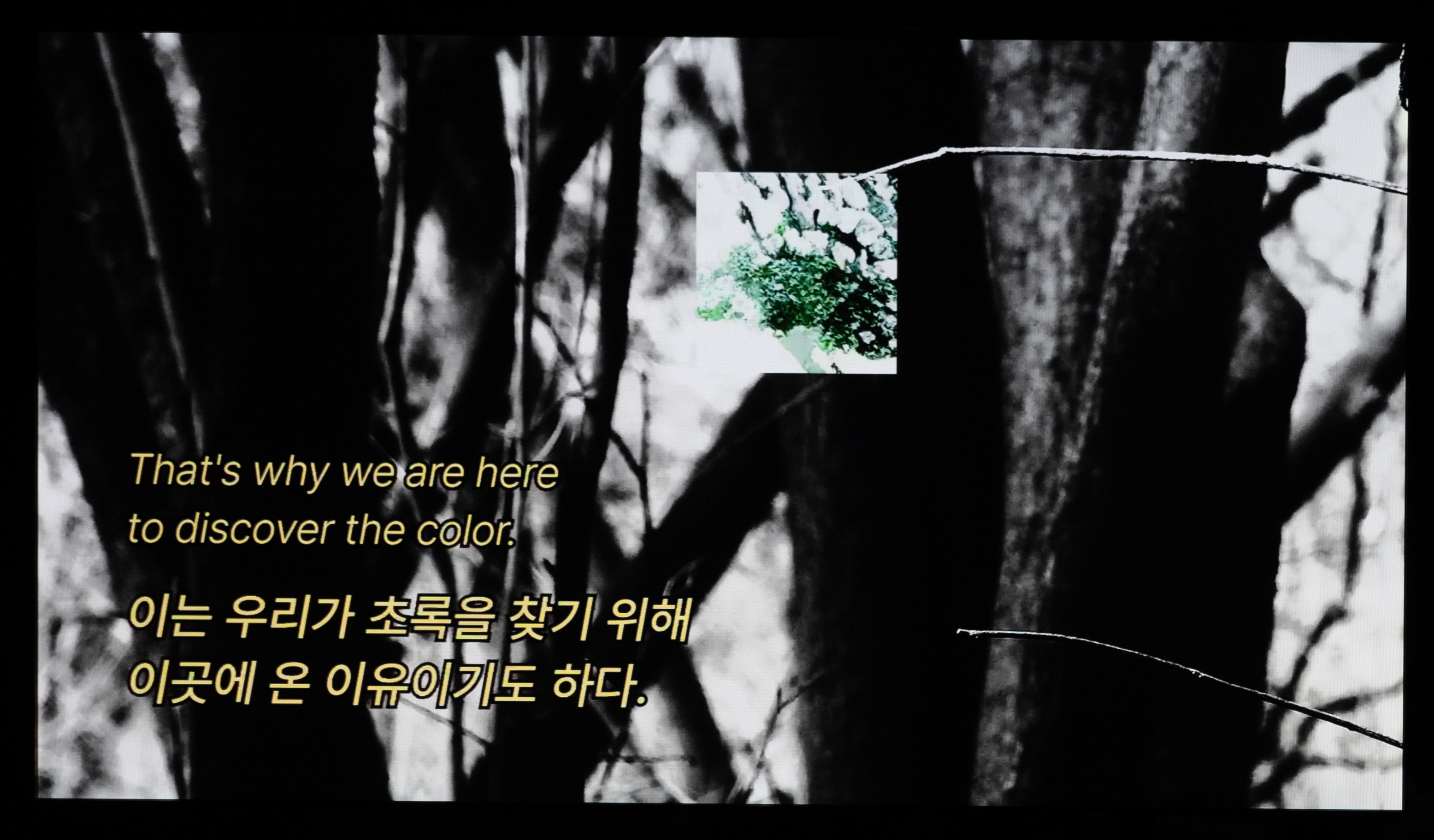
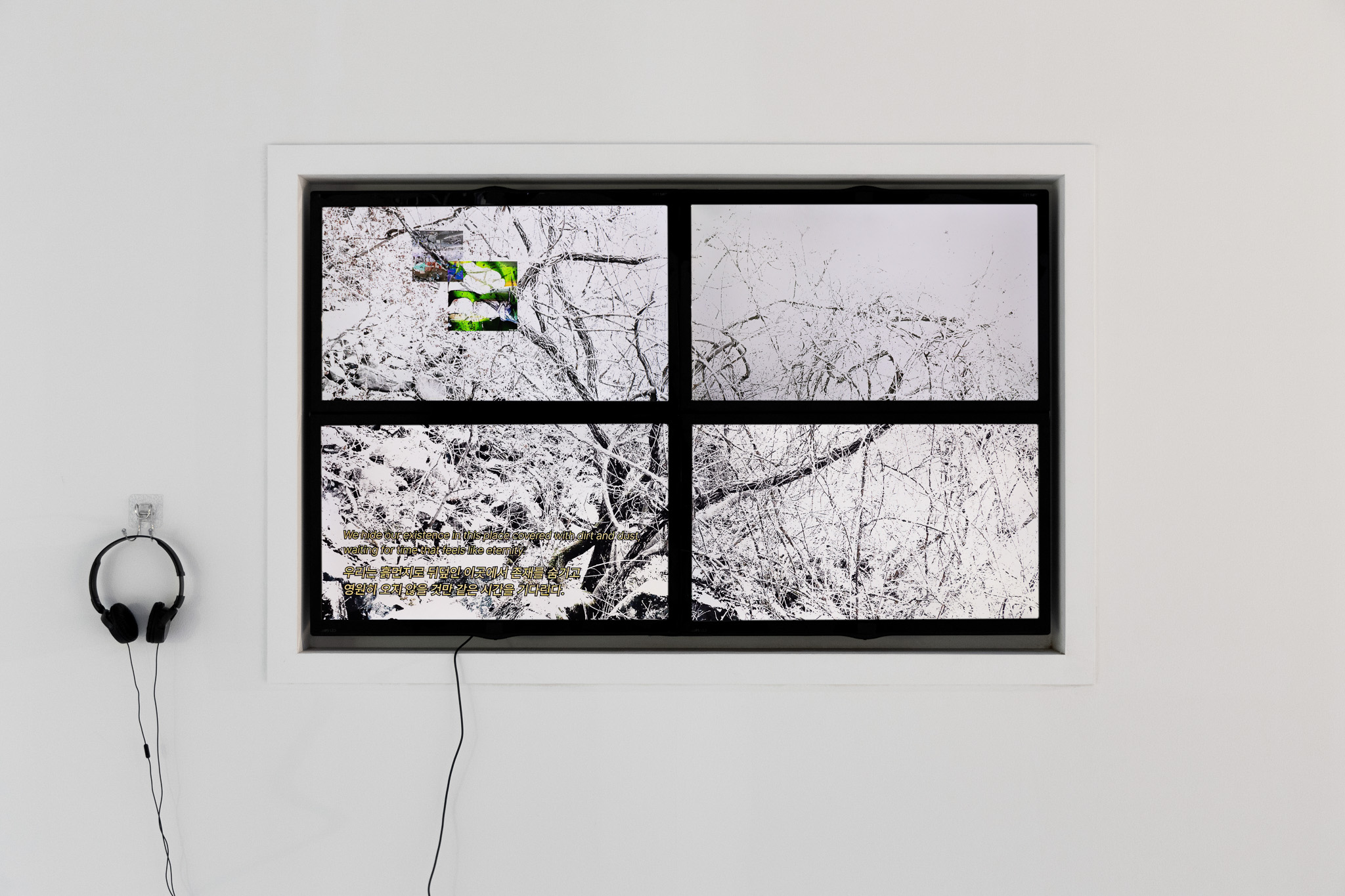
식물 복원 사업의 책임을 맡고 있는 ‘Phony Garden’의 제작자는 멸종된 생물을 되살려 내기 위해 이전 세대 지구에 남아있는 일부 환경 데이터들을 AI에게 인식시켜 아직까지 남아있을지 모르는 식물의 흔적을 찾으려 한다. 이 영상은 로봇을 학습시키기 위해 과거 데이터에서 찾은 많은 영상들 중 일부이다. 과연 인류가 남긴 영상 자료만으로 인공지능은 식물을 발견할 수 있을까?
Find Green, Video
The producer of ‘Phony Garden’, a person in charge of the plant restoration project, tries to find traces of plants that may remain on earth by letting the AI scan environmental data remaining on earth. The aim is to bring back organisms that have gone extinct.
This video is just one out of the many videos that were used to train the robot, found from old data. Will the AI be able to discover plants solely by relying on video data left by humans?